A Founder’s Perspective: Experience, Gratitude, and Responsibility
The commitment of Operation Bangladesh to persons with disabilities is not theoretical. It is deeply personal and ongoing.
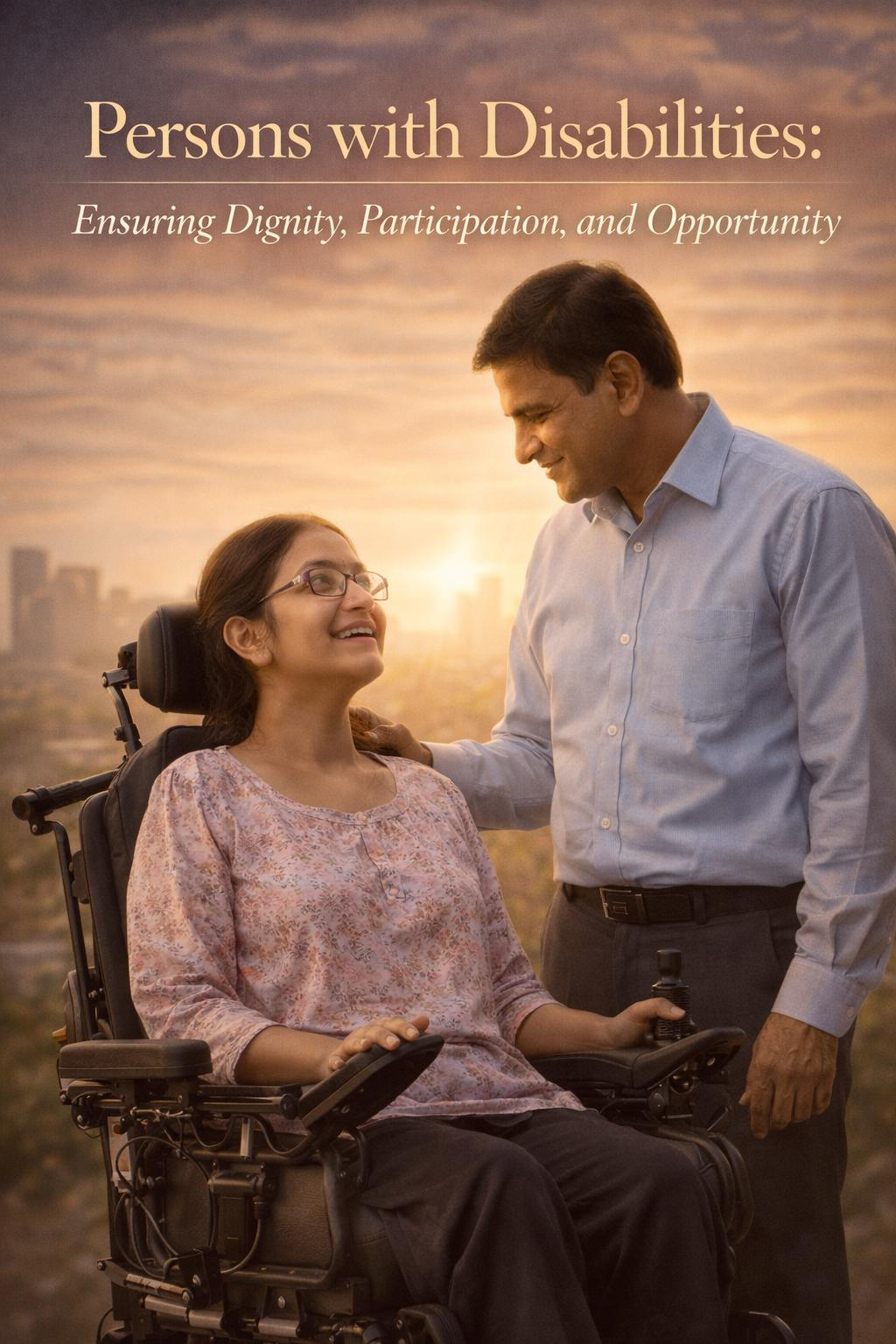
The founder of Operation Bangladesh is the father of a daughter living with Muscular Dystrophy (MD)—a lifelong condition with which she was born and has lived for more than 22 years. She is alive, resilient, and continues her journey with strength. Through her life, the founder has come to understand disability not as a limitation of human value, but as a call for greater responsibility from society.
For a period of time, his daughter was honored as a Goodwill Ambassador for Muscular Dystrophy in the State of Hawaii, and she was later nominated for a national ambassador role in the United States. That opportunity was declined— not from lack of belief in the cause, but because of the realities of family life and professional responsibility. Extensive travel was not possible, and as parents, the founder and his wife chose presence over position.
Living in the United States, and raising a child with disability in Hawaii, the founder has witnessed what becomes possible when a nation commits to inclusion and care. The United States has created one of the most supportive environments in the world for persons with disabilities—where access, dignity, education, mobility, and protection are not privileges, but rights.
Disabled individuals in America can attend school, access higher education, receive services at home when needed, use advanced assistive technologies, and participate fully in society. These systems do more than provide services— they communicate a powerful truth: a person with disability is not less than anyone else.
For this, the founder expresses sincere gratitude to the United States government and its institutions, whose policies and protections demonstrate what a humane society can achieve.
One moment remains especially vivid in the founder’s memory.
The first time his daughter received her electric wheelchair, it was inside a hospital auditorium. As she began to move, she drove across the open space with joy, speed, and freedom—circling the room as if flying. In that moment, the wheelchair was not a medical device. It was liberation. It replaced what the body could not provide with what human care and technology could.
That moment carried a deeper meaning.
What God does not give naturally, He gives humanity the ability to provide— and He watches to see whether we choose compassion or indifference.
This belief shaped the foundation of Operation Bangladesh.
When the founder speaks about quality of life, he does not measure it by comfort or wealth. He measures it by how persons with disabilities live. Because if a society ensures dignity, mobility, and opportunity for its most vulnerable citizens, then the condition of the rest of society is already known.
This understanding raises an unavoidable question:
- What about underdeveloped countries?
- What about rural villages where people have never seen a wheelchair?
- What about communities where disability still means isolation and silence?
In the eyes of the founder, the measure remains simple and universal:
If a person with a disability in a poor country can live with basic dignity, mobility, care, and opportunity—then the rest of society is also living in humane conditions.
Operation Bangladesh exists to help move societies closer to that standard.
This commitment is not charity.
It is responsibility.
It is gratitude returned forward.
The founder holds a deep belief that when individuals and societies give sincerely to the most vulnerable, life gives back. Supporting persons with disabilities, standing with single parents, protecting orphans—these acts do not weaken a nation. They elevate it.
That is why persons with disabilities are not on the margins of Operation Bangladesh. They are at its moral center.
A society that protects its most vulnerable does not lose strength.
It discovers it.