Vulnerable Communities
Vulnerable Communities
Poverty is not a statistic. It is a lived experience — quiet, relentless, and universal.
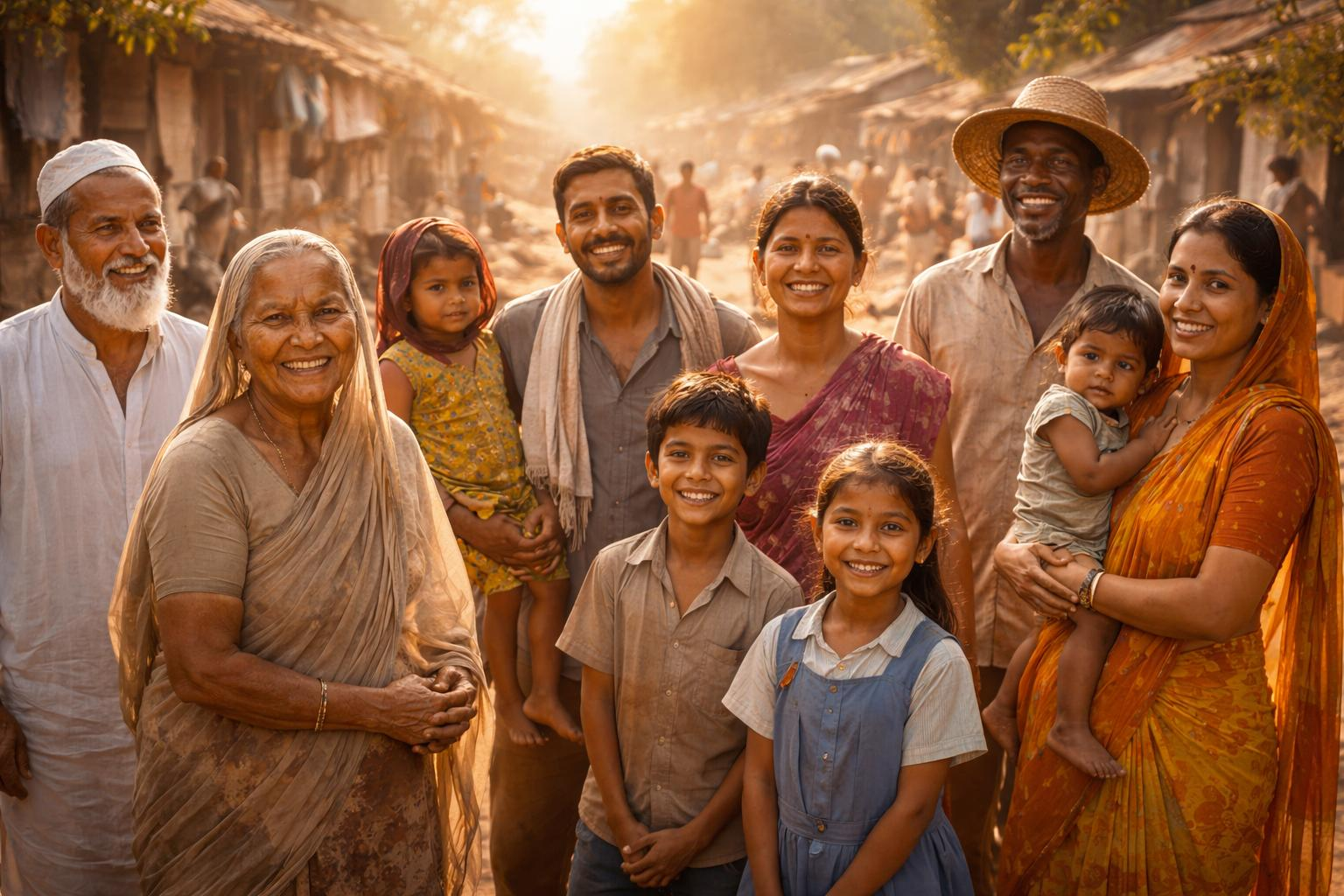
Across nations and regions — in bustling urban neighborhoods and quiet rural plains — there are communities whose basic human needs are not met: people whose rights to clean air, safe water, health security, education, and opportunity have not been fully realized.
Operation Bangladesh stands with these vulnerable communities not out of pity, but out of recognition: that every human life has intrinsic dignity and potential — and that when this dignity is eroded by systemic hardship, entire societies are weakened.
The Many Faces of Vulnerability
Vulnerability is not limited to one group or one geography. It spans:
- Those who struggle to secure daily bread
- Those whose health is threatened by the absence of care
- Those whose children risk losing access to education due to financial burden
- Those whose labor sustains society but offers no personal stability
- Those who carry responsibility for others while receiving little support themselves
These individuals are not defined by need alone. They are defined by resilience. By courage. By the quiet strength that persists even when survival feels heavy.
Operation Bangladesh understands that vulnerability is not a label. It is a call to collective responsibility — one that transcends borders, politics, and ideology.
What It Means to Serve Vulnerable Communities
To serve vulnerable communities is to affirm that:
- Every child has the right to knowledge
- Every elder has the right to dignity
- Every person with disability has the right to inclusion
- Every worker who serves society has the right to stability
- Every farmer who feeds a nation has the right to sustainability
This is not charity. It is responsibility in action.
And it is not a short-term gesture. It is a long-term commitment to restoring human capacity, strengthening social fabric, and investing in national resilience.
By stabilizing vulnerable communities, Operation Bangladesh contributes directly to national resilience. When families are protected from sudden collapse, when education is preserved, when essential workers and producers remain secure, social pressure is reduced, trust in public systems increases, and the risk of long-term instability diminishes. Community stabilization is therefore not only a humanitarian outcome — it is a strategic foundation for social cohesion, economic continuity, and sustainable national development.
Leadership, Dignity, and Shared Purpose
National leadership begins with the recognition that vulnerability is not an indictment of a nation — but an opportunity for shared purpose.
When leaders prioritize support for vulnerable communities, they strengthen:
- Social cohesion
- Economic stability
- Human trust
- Future potential
Operation Bangladesh exists to partner with governments and leaders who share this belief: that a nation is strongest when its most vulnerable are supported with dignity and purpose.
A society is measured not by its wealth, but by how it protects and uplifts its most vulnerable citizens.